Saturday, May 18, 2013

Swimming with Turtles at Reethi Rah


I thought it was about time I blogged about the amazing Turtle Adventure trip that we do here… I even made a video 


Reethi Rah is lucky enough to have a Hawksbill turtle feeding ground very close by known as “Turtle Reef”.  It’s a beautiful site, amazing fish life and of course the turtles. Out of all the places I have snorkeled and dived over the Maldives this reef is truly unique. Not only can you guarantee seeing turtles in their natural habitat but you can really have some up close and personal encounters with these ancient marine reptiles.  Most of the turtles are very relaxed, the shy ones will swim away but the ones that are not phased by people will sometimes swim along with you, or even come up for a breath of air right in front of you, a very cool sight to see.

The lifecycle of a turtle is pretty straight forward, when the hatchlings crawl out of the nest and first enter the water, they swim out to the open sea. They will spend the first couple of years out in the open ocean to avoid predators, and to basically eat and grow, and then when they reach dinner plate size they return inshore to a feeding ground. The turtle will spend most of its life at this feeding ground just leaving periodically to mate and nest.

Most reefs were you might happen to see a turtle, well generally the turtle will take one look at you and take off very quickly…. but not at Turtle Reef.  As it’s a feeding ground and home to the majority of the turtles that we see, I think that they don’t feel threatened when they see people, and therefore they don’t swim away. They are nearly always eating, using their long beaks to probe into spaces between corals to find sponges and invertebrates to eat. Turtle Reef is covered in a green zooanthid, an invertebrate, which the turtles love to eat. When they are eating, they really don’t seem bothered by all the people looking down at them. Sometimes the turtles will look up at you, as if to say, “not these crazy people again”… and then just carry on eating!!

I do like to think I know some of these turtles personally now, I recognize the common ones I see and now many of them have names.  Turtles have a unique scale pattern on each side of the head, kind of like a finger print so you can identify them, but I also recognise them by the patterns of encrusting coralline algae growing on their shells. All the turtles I see are photographed and uploaded into a photo identification database to try to establish their population size, foraging sites and migration patterns. So far I have identified over 60 different turtles from Turtle Reef and then about 25 different turtles from another reef called West Point.

The majority are female turtles, Spot, Ringo, Crush, Samha, Reina, to name a few of the regulars, then there are only 3 males that I have recorded, Marvin, Badhur and Ali. The males have a long tail which is how you can tell them apart from the females, well we all know it’s not really a tail!!! There are also lots of juveniles on the reef as well which is great, they are so cute, there is Junior, Kurumbas, Mona, Bear, Noah…. Generally every month I see one or two new turtles as well, sometimes they may stay a while or sometimes they are just passing by.

So out of the thousands of photos I have of these turtles, here are some of my favourite shots of the common turtles that I see, I wonder if they recognise me as much as I recognise all of them…

 Amber eating a huge crown jellyfish

 Bailey

 Bear - Juvenile

 Bubbles

 Caroline

 Charlie

 Charlie

 Clover

 Crush

 Crush

 Crush breathing at the surface

 Crush eating

 Ringo and Amber in the blue


 Diving down


 Jazz - a large female

 Joey

 Junior - tiny juvenile

 Junior

 Kurumbas (means coconut in the Maldivian language)

 Marvin the male

 Marvin at the surface

 Marvin


 Mona - another juvenile

Noah - more about this one later 

 Otis - her shell is being cleaned by surgeon fish

 Reem

 Ringo

Ruby

 Samha eating

 Samha

 Spot


Spot

Teddy breathing

Tiger

Aya

Spot with guests

Joey

 Amber biting Ringo


Wednesday, May 1, 2013

Tiny Juvenile Scorpion Fish on our House Reef


So just the other morning I was out on our house reef doing some coral gardening with the coral frames. A manta ray could swim past me and I wouldn’t see it as I am so zoned in on what I am doing! However, I did notice the teeny tiniest scorpion fish, it was so cute and about the size of my thumb nail… and I have small hands!!! I actually thought it was a piece of rubble as it was so well camouflaged and just blended in with its background but then it started to jump towards me. After a closer look I realized that it was in fact a juvenile scorpion fish, very cool but also very poisonous. I think I must have disturbed it as it looked somewhat grumpy but then these fish always do. 

Scorpion fish are members of the family Scorpaenidae, which includes lionfish and stonefish. This group of predatory fish are found amongst coral reefs and contain many of the world’s most venomous species. The Reef Stonefish is actually the most venomous fish in the world. All are predators equipped with toxic venom in their dorsal spines which can give a nasty sting. I doubt this one so small could give me a nasty sting but I didn’t want to find out all the same!

Scorpion fish are very cool looking fish so its always nice to see them on the reef. Their body is often covered in feathery fins or tassels or warts that help the fish camouflage itself into the surrounding background. They are hard to spot at the best of times but one this tiny…. I was lucky to see it at all. We call them ambush predators as they sit perfectly camouflaged on the reef waiting for a meal to swim past. They can attack at lightening speed often catching small fish by surprise. They stun their prey with their venom before sucking it up and eating it… nice! Due to their amazing camouflage and toxic defensive spines scorpion have few natural predators. Their biggest threat is actually being caught for the aquarium trade or habitat loss from the destruction of coral reefs.

It’s not a fish that I often see at the best of times so I doubt I will see this little one again when I am back on the house reef… but you never know :) 


                      Adult Scorpion fish in comparison - such amazing camouflage. 
                                                         What a cool looking fish


Thursday, February 28, 2013

A beautiful close encounter with Bottlenose dolphins


I didnt think today was going to get any better after yesterday seeing dolphins underwater followed by my first encounter with 2 sailfish.... how wrong was I. One of the many reasons why I love my job, you just never know what to expect….

Today was perfect weather for snorkeling. The sea was like glass, you didn’t really even have to get in the water as you could see everything the reef had to offer just by looking down from the sailing dhoni. It was like being on a glass bottom boat. However, the water is so inviting you just have to get in. This is why in my opinion the best time of year to come to the Maldives is always February and March, the sea can be like glass most days with visibility for miles, its postcard perfect.

Any day when it’s like this you know the snorkeling is going to be nice, its so peaceful under the water and above. I have a turtle adventure snorkel trip with 6 guests. Turtle Adventure is always amazing, I haven’t blogged about this trip yet but I will soon. It’s an unique and beautiful experience as you get to see these ancient marine reptiles up close. Often you can see lots of turtles as the reef we go to is a feeding ground. They are generally very friendly, coming up to breathe right in front of you, this alone is enough to blow the guests away as you really do feel like you’re swimming with them in their natural environment. Today we had one turtle, her name is Reina, yes lots of them have names as I recognize them by their shell patterns and also by their unique scale pattern on each side of the head. Often we see the same ones most trips. Anyway, Reina followed us all the way up the reef just swimming right under us. It was lovely. It had been a very nice snorkel, 6 turtles and 2 sharks and then we hear a shout from the Captain, “Dolphins”!!! They were at the other end of the reef and we could see their fins sticking out of the water, even though they were far away it looked like there were lots in the water. It didn’t really matter how far away they were, I think anyone would have started swimming towards them, what is it about dolphins that everybody loves, was it the series flipper or watching documentaries on tv, or maybe just remembering all those times you had seen them at marine parks, jumping and flipping, their charismatic smiling faces looking at you. However, seeing dolphins in the wild, in their natural environment is just something else!
As we got closer they disappeared from the surface and went under. I told everyone to keep looking down, and then, there they all were, swimming right under us. I dived down and was shocked about how many there were, at least 40 or 50, all tossing and turning below us, awesome does not come close to a sight like this, I was blown away, so my guests must have been too. You could hear them as well chatting amoung themselves, don’t really know how to describe how dolphins sound, its like a faint high-pitched whistle with clicking sounds. We followed them for 15 minutes out into the blue. Some of them were definitely checking us out as well, they were turning their heads and looking straight out us, it was beautiful. I was lucky enough to get some photos of them, these are by far the best pictures I have of dolphins, and this was definitely one of my top dolphin moments. So here are my best photos, I’m sure they will make you smile, I haven’t stopped smiling all day.


Monday, February 18, 2013

My First Sailfish...


I saw my first sailfish underwater today and I even managed to take a photo. I say underwater as I have seen sailfish before but hanging from a deep sea fishing boat so not quite the same.  Far nicer to see them in the water. These powerful fish are actually the fastest fish in the ocean, reaching speeds of 68 miles per hour. They get their name from the spectacular dorsal fin which stretches nearly the entire length of their bodies. They also have an elongated bill, which forms a distinctive spear, a bit like swordfish or marlin, so they are often referred to as billfish. 

I was lucky enought to see not one but two of them. I had just come up from a dive and I saw something jump out of the water, the next minute when I looked down I saw both of them just hovering under me in the blue. I didnt really know what they were going to do and I thought they would just shoot off out of sight but it seemed like they were just looking at me as well. Their sail was up so maybe they felt threatened or maybe they had been using their sails to herd small fish to eat. They like to eat silvery fishes like anchovies and sardines and also squid. 

I dont know too much about these silvery fishes, I'm more of a coral reef fish biologist but these guys were impressive to see. They can grow to more than 3 meters and weigh up to 100 kilos!! What was even nicer was just before the sailfish i saw a pod of about 10 bottlenose dolphins under the water as well, this doesnt happen too often either so all in all a very good day under the sea. You just never know what you might see..... :) 


Sunday, February 10, 2013

An Octopus Tale….


I was greeted by an octopus this morning on my turtle adventure snorkel. A nice surprise as I don’t normally see these strange alien looking creatures. For me they belong in space rather than under the sea, but the oceans are filled with lots of weird and wonderful creatures, so why not blog about octopus. 

Octopus are invertebrates which means they have no back bone. They are classified in the mollusk family, and many mollusks, like clams for instance, have no brains. Octopus on the other hand are actually very intelligent, in the invertebrate kingdom they have the biggest brain to body ratio. Researchers who study octopuses are convinced that these animals have developed intelligence, emotions, and even individual personalities!

Octopus are quite remarkable creatures. They have no bones in their body so they can squeeze into tight places. They have 3 hearts and 8 arms which are covered in hundreds of suckers that feel as well as taste. They have a sharp parrot like beak and a tongue covered with teeth. Octopus can also bite and most have neurotoxic, flesh-dissolving venom!! They can also shape shift and change colour, and to escape predators they squirt ink. Most interestingly if you chop off an octopus’s arm they will grow another one back!

Octopus are also very caring parents, well the female is! When she is ready to mate, she releases a chemical into the water that attracts males. They follow this chemical to the female, where they will often fight one another for the right to mate with the female. The same chemical that attracts the males stops the males from eating the female! Yes octopuses are known to eat each other! Once mating is over the female builds a den and will lay tens of thousands of eggs which hang from the roof of her den. She then spends the next few months caring for her eggs. She ensures that bacteria and algae do not grow on them, and she blows water across them to ensure a constant oxygen supply. When the eggs hatch the offspring swim to the surface and the mother crawls out of the den and dies.  How sad, they neglect to eat during the time spent taking care of their eggs, eventually dying of starvation. The male will also only live for a few months after mating. In fact, the lifespan of a octopus is relatively quite short and some species live only for 6 months.

I have always loved octopuses. So cool to watch, changing colours right in front of you, there big beady eyes watching your every move. Their color-changing ability can also be used to communicate with or warn other octopuses.  They can also use the muscles in their skin to change the texture of their mantle to achieve a greater camouflage. They turn white and smooth if they are relaxed and red and spiky if they become agitated. As soon as they know they have been spotted they dart into a hole and squeeze themselves in waiting for you go. Their main defense is to hide or not to be seen at all, either that or a fast escape. You may have to wait a long time until they finally decide to come out. This is definitely one item of seafood that I do not eat and I love seafood (only the sustainable kind of course), anyway how could I possibly eat something that’s so intelligent, it seems unfair.  So I have left you with a few photos of the octopus I met this morning. He turned from white to red so obviously not as happy to see me as I was to see him.


                                       Octopus out and about before he knew he was spotted

Fled to a hole to hide and looks slightly agitated 

                                          But then he calmed down and popped his head out


Monday, February 4, 2013

Manta Season is here...


Finally the manta’s have arrived at Reethi Rah, yayyy…. For those of you who haven’t see a Manta ray or don’t know what one is, don’t worry, I will explain what these majestic animals are and go from there…..

Manta Rays are cartilaginous ‘elasmobranch’ fish. This means they are close relatives of all sharks and rays, and  therefore have a skeleton made of cartilage, not bone. Most fish in the oceans are actually bony fish, leaving only about 1100 cartilaginous fish; 500 species which are sharks and 550 species of ray.There is a huge variety and abundance of ray species around the world; stingrays, skates, eagle rays, electric rays. The majority of these are bottom dwellers, whose broad flattened bodies are superbly adapted to this way of life. Manta rays are actually part of the stingray group belonging to the family Mobulidae. As the name suggests stingrays have a barb at the base of their tail which they use for defense against predators. Manta rays don’t actually have a barb, instead they rely on their speed and size to elude predation.

The manta ray is the largest of all the rays. They are free swimming with huge diamond shaped bodies. They continue to swim from the time they are born until the time they die! They must keep swimming in order to keep the water flowing over their gills. There are two species of manta ray, the resident reef manta (Manta alfredi) can be up to 4m wide and the gaint oceanic omanta (Manta birostriscan be up to 7m!!! I have never seen an oceanic manta but they are here in the Maldives, they are long distance travelers spending all their time out in the open sea. In the Maldives the resident mantas are very common. They tend to stay in shallow water close to the reef with much smaller home ranges – 100s of miles as opposed to 1000s.

Manta rays are solitary animals but they come together and aggregate at feeding sites and cleaning stations. Despite their large size they feed on some of the smallest organisms in the sea known as plankton. Cephalic fins on their head unfurl to channel the water into their huge mouth, and using their gills like sieves, they filter out the plankton from the water. Mantas are known to make seasonal migrations in order to take advantage of particular abundant areas of food and at this time of year from January to April one of the places they can be found is on the West side of North male Atoll, right were Reethi Rah is located.

So far this year not many mantas have been spotted yet but this morning when I went out to our House Reef to do some work on the coral frames, I was greeted by 8 Mantas, wow, what a very nice and unexpected surprise. Manta season has finally arrived, fantastic. They were feeding on the surface and as I had my dive gear on I just lay on my back under the water and watched them glide over me. They were all around, swimming in circles to collect their food. They remind me of flying saucers for some reasons, maybe it’s their huge open mouths and their long wing-like pectoral fins slicing through the water. 

While working in the Maldives I have been lucky enough to see mantas many many times, once I was in the water with over 80 of them swimming around me. This was at a very special manta feeding spot unique to the Maldives called Hanifaru Bay in Baa Atoll. It is one of the worlds most spectacular underwater events. As you can imagine I was completely blown away by the whole experience. Anyway, it really doesn’t matter how many times you see these beautiful animals, each and every time is just as amazing as the last. They are just such fascinating and captivating creatures to watch, when you see one nothing else really matters, its just you and the mantas, time stands still! That’s what I love about my job, you just never know what you are going to see next, days can be full of surprises. Even better, this afternoon I was in the water with 2 guests putting their corals frames on the house reef when a single manta ray just happened to swim right past us!!! My guests had never seen a manta before which can be quite a scary sight if you don’t know what you're looking at, are they dangerous or harmless, will they eat me???  Especially when their huge mouths are heading right towards you. Well of course they are not dangerous, in fact they can be quite shy and swim away from you, however when there is plenty of food for them in the water, they really don’t care who is around. They almost put on a show for you, twisting and barrel rolling in the water to collect their food, you could watch them all day. My guests were so happy, they saw their very first manta, it was a wonderful sight and hopefully something they will remember forever.

The only unfortunate thing was that I didn’t have my camera with me, how gutting, I have plenty of photos of mantas but to identify them you need to take a photo of the black spot pattern on their ventral surface in between the gills. Every manta has a unique spot pattern, which can therefore be used for identification, like a human fingerprint. This enables the development of photo-id databases so ultimately you can estimate their population sizes and migration patterns. After 6 years of data collection, the Maldivian Manta Ray Project has already identified over 2300 different mantas from the Maldives, with new individuals being sighted on a regular basis. Conditions were perfect as well, I was thinking at the time maybe i could draw the spot patterns on my slate, hmmm, yeah no chance! What is even more worrying though is that in recent years, a fishery for these animals has developed with devastating effects on their populations globally, but I will blog about this another time.

For lots more interesting information on Manta Rays the please check out the Manta Trust website here. The trust was formed to coordinate global research to conserve manta rays while raising valuable awareness for these amazing animals. It’s a very impressive site and worth a look. Although I forgot my camera today I have left you with some photos of my previous manta encounters, it will give you an idea on just how impressive these animals are…..


Tuesday, January 29, 2013

Reethi Reefs


Hello again, well it’s been a long while since my last blog. Christmas has come and gone, 2013 arrived without the world ending and now already one month has almost passed so I wanted to get at least one blog in for January. As I have had a busy month working with the coral frames I thought that’s a good place to start….

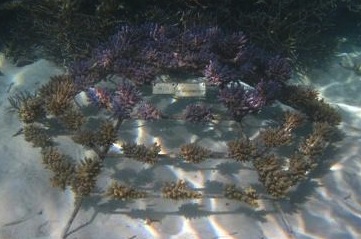
I first started working with coral frames at Four Seasons in 2010. The company I was working for, a marine consultancy called Seamarc, developed an artificial reef system called coral frames, but similar structures are used all over the world. These coral frames are instrumental in enhancing the biodiversity of existing reef habitats as well as generating new ones. They provide a nice substrate for corals to grow on while reducing sedimentation and predation. In 1998, unusually warm oceanic waters, resulting from an exceptionally strong El Nino event, caused the coral to bleach across a large proportion of the Maldivian Reefs. With much of the coral having died from this event, artificial reef projects have become a valuable tool for restoring reefs and nurturing them back to health. Sadly, in 1998 not just the Maldives was affected by the El Nino; 16% of the world's coral reefs died as a result of increased water temperatures!

One&Only Reethi Rah launched "Reethi Reefs" Coral Propagation Project in September 2012. Reethi actually means beautiful in the Maldivian language, so "Beautiful Reefs". The main aim of the project is to protect and develop the coral around the resort, as well as increasing awareness about the vulnerability of coral reefs to our guests. The transplantation process involves attaching fragments of coral onto a coral frame, which will eventually grow into new colonies. The frames quickly attract a multitude of reef fish and invertebrates which call the new reef their home! It’s really quite amazing and also very beautiful, after a few years of coral growth the entire frame becomes covered until you can’t see the frame at all. Also another important part of this project is that after a few years of growth, the corals on the frames will be mature enough to spawn and produce small coral larvae. These larvae will drift in the ocean for a few days, becoming part of the plankton, before settling onto a natural reef were they will grow into a new colony, thus helping to populate existing reefs in other areas.

So far at Reethi Rah we have 75 coral frames. Most of these are on our house reef which is the area I want to improve. The fish life here is very nice, lots of schools of snappers and sweetlips, butterfly fish and colorful parrotfish but not so much coral. Ideally by placing coral frames here I want to improve the health of the reef (ie. more corals) and the habitat for the many fish and invertebrates that live there. Last week I managed to spot a mantis shrimp and an octopus and sometimes one of the resident turtles may swim past me while I’m working or even a blacktip reef shark. I’m really quite excited to see how the reef will look in the next 6 months when the frames have some growth. I think it’s going to be beautiful and full of life. The guests that come here can sponsor their own frame if they like, they attach the corals to the frame with me and then we drop it on the reef. Every 6 months I send them new photos of their frame so they can watch it grow.

With over 75 frames to look after and continually putting new frames in the water, I can become quite busy. The frames need to be checked regularly to make sure they are growing and any dead fragments need to be replaced with new fragments. The frames also need to be cleaned from algae which can grow over the coral fragments and smoother them. Quite a boring and tedious job but luckily with all the herbivorous fish on the reef they make my life much easier by eating all the algae. Thank you fish! You could call me an underwater gardener which is ironic really as you only need to ask my mum that green fingers in the garden, I don’t have!! Give me any plant and it will probably be half dead in 6 months or even sooner. But underwater gardening, yep that’s me. This is a job I’m good at. So I have left you with a few parting shots of some of the very beautiful coral frames I looked after at Four Seasons and then the start of the coral frames here at Reethi Rah. I will keep you all updated on how these turn out but I am confident that the house reef will become a vibrant and healthy coral garden for us all, including the fish!


Puffer Fish

Common Lion Fish


Giant Moray Eel