Tuesday, January 29, 2013

Reethi Reefs


Hello again, well it’s been a long while since my last blog. Christmas has come and gone, 2013 arrived without the world ending and now already one month has almost passed so I wanted to get at least one blog in for January. As I have had a busy month working with the coral frames I thought that’s a good place to start….

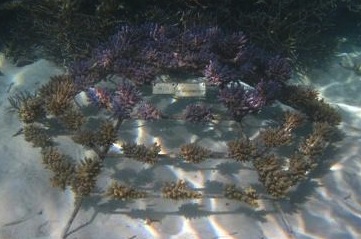
I first started working with coral frames at Four Seasons in 2010. The company I was working for, a marine consultancy called Seamarc, developed an artificial reef system called coral frames, but similar structures are used all over the world. These coral frames are instrumental in enhancing the biodiversity of existing reef habitats as well as generating new ones. They provide a nice substrate for corals to grow on while reducing sedimentation and predation. In 1998, unusually warm oceanic waters, resulting from an exceptionally strong El Nino event, caused the coral to bleach across a large proportion of the Maldivian Reefs. With much of the coral having died from this event, artificial reef projects have become a valuable tool for restoring reefs and nurturing them back to health. Sadly, in 1998 not just the Maldives was affected by the El Nino; 16% of the world's coral reefs died as a result of increased water temperatures!

One&Only Reethi Rah launched "Reethi Reefs" Coral Propagation Project in September 2012. Reethi actually means beautiful in the Maldivian language, so "Beautiful Reefs". The main aim of the project is to protect and develop the coral around the resort, as well as increasing awareness about the vulnerability of coral reefs to our guests. The transplantation process involves attaching fragments of coral onto a coral frame, which will eventually grow into new colonies. The frames quickly attract a multitude of reef fish and invertebrates which call the new reef their home! It’s really quite amazing and also very beautiful, after a few years of coral growth the entire frame becomes covered until you can’t see the frame at all. Also another important part of this project is that after a few years of growth, the corals on the frames will be mature enough to spawn and produce small coral larvae. These larvae will drift in the ocean for a few days, becoming part of the plankton, before settling onto a natural reef were they will grow into a new colony, thus helping to populate existing reefs in other areas.

So far at Reethi Rah we have 75 coral frames. Most of these are on our house reef which is the area I want to improve. The fish life here is very nice, lots of schools of snappers and sweetlips, butterfly fish and colorful parrotfish but not so much coral. Ideally by placing coral frames here I want to improve the health of the reef (ie. more corals) and the habitat for the many fish and invertebrates that live there. Last week I managed to spot a mantis shrimp and an octopus and sometimes one of the resident turtles may swim past me while I’m working or even a blacktip reef shark. I’m really quite excited to see how the reef will look in the next 6 months when the frames have some growth. I think it’s going to be beautiful and full of life. The guests that come here can sponsor their own frame if they like, they attach the corals to the frame with me and then we drop it on the reef. Every 6 months I send them new photos of their frame so they can watch it grow.

With over 75 frames to look after and continually putting new frames in the water, I can become quite busy. The frames need to be checked regularly to make sure they are growing and any dead fragments need to be replaced with new fragments. The frames also need to be cleaned from algae which can grow over the coral fragments and smoother them. Quite a boring and tedious job but luckily with all the herbivorous fish on the reef they make my life much easier by eating all the algae. Thank you fish! You could call me an underwater gardener which is ironic really as you only need to ask my mum that green fingers in the garden, I don’t have!! Give me any plant and it will probably be half dead in 6 months or even sooner. But underwater gardening, yep that’s me. This is a job I’m good at. So I have left you with a few parting shots of some of the very beautiful coral frames I looked after at Four Seasons and then the start of the coral frames here at Reethi Rah. I will keep you all updated on how these turn out but I am confident that the house reef will become a vibrant and healthy coral garden for us all, including the fish!




Puffer Fish

Common Lion Fish


Giant Moray Eel


Friday, October 12, 2012

Finally....


So it finally happened, the third and final nest that we have all been waiting for hatched in the early hours of the morning on the 11th October, at 3am to be precise! Altogether 151 green turtle hatchlings crawled out of the nest.  It was amazing to watch as one by one these cute little fuzzy things emerged from the nest, a head would appear and then a body as they pulled themselves free, and then another and another, they were starting to pile up on top of each other trying to break free! They looked fuzzy as their bodies were completely covered in sand! Just thinking about it now makes me smile. 

As the moon was absent we used torches to light their way to the sea instead. They followed the light and made a mad dash for it, as they got closer they seemed to get faster as well like they sensed the ocean was close, it was funny to watch as they almost skipped and jumped themselves to the sea. It is widely believed that hatchlings imprint the unique qualities of their natal beach while still in the nest and/or during their first trip from the nest to the sea. Therefore it was important that we let them run down the beach to the sea. Otherwise they might not know how to return back to the beach to nest when they are adults. As they entered the water we collected them all and then we will release them in a few days on the outside of the atoll were hopefully they will have a better chance of survival. Although the majority of them will probably perish, hopefully one or two will make it to adulthood and then return to Reethi Rah in the future to lay more nests. This is a remarkable fact about sea turtles. They will always return to the lay their nests on the same beach were they were born decades before. Although i think i might have mentioned that before!

I finally got back to bed at 630am but I couldn’t sleep as I was so wired from what had just happened. I just got to witness one of nature’s incredible events, words can't quite describe it, it was amazing, beautiful, and almost quite surreal (probably because of my lack of sleep) but it was definitely something that I will never forget! Out of the many photos I took I have uploaded some of the best ones to share with you. Even though you weren’t there to see this I’m sure these photos will make you smile, 151 cute baby turtles, who couldn’t not smile! Enjoy and hopefully next year we will get to see it all over again! 


Saturday, October 6, 2012

False alarm


This morning I woke up from the sound of the rain, it was 5am and the first thing that popped into my head was the turtle nest!!! Hatchlings will sometime emerge from the nest in a rain storm you see and this is what happened with the last nest so I thought I better check just to be sure.  But thankfully its not happening yet…. I got to the nest and there was no movement. This I was quite glad about as it was proper tropical rain and trying to do anything in that would have been hard and very wet!  So now I find myself wide awake at 530 in the morning!! Is this a sign of the next week to come, god I hope not, or im going to be one tired marine biologist. Security are patrolling the nest at night but I am so worried they might miss it and I will come to the nest one morning and all the hatchlings will be cooking in the hot sun as they were unable to get out of the enclosure. Can you imagine….. marine biologists cooks 100 turtle hatchlings in the hot sun!!!! hmmmm, not good.  Obviously this wont happen but you could say its my little turtle nightmare!!! So the count down continues…..

Unexpected guests...


On the 1st October Reethi Rah was greeted by some unexpected and very cute guests…….

A turtle nest that we did not know about hatched in the early hours of the morning on Turtle beach. Nearly all of the hatchlings made their way into the lagoon to start their lives at sea. However most of their lives would have been very short-lived. Only 2 inches in size they make bite sized meals for all the fish and sharks waiting in the lagoon to gobble them up, a sad fact of life as only 1 in a 1000 hatchlings will make it to adulthood!!

However, although I was very gutted to miss this event and unable to try and save the hatchlings from their ultimate doom the gardener did manage to find 5 of these little guys and bring them to us at recreation. We plan to keep them for a few months and then release them into the wild when they are slightly bigger so hopefully they have a better chance of survival. But it doesn’t stop here…..

Again on the 4th October yet again another nest that we did not know about hatched on Turtle beach and again 100 or so hatchlings followed the light of the moon into the sea, and again most of them or all of them ended up as breakfast! Whether both these nest were from the same adult female turtle we do not know. Usually they have 10-14 day intervals between laying nests and as this was just a few days it may well have been a different turtle. One little hatchling from this nest however was found in the bushes so he obviously got lost on his way to the sea. Lucky for him though, his bad sense of direction has saved his life, as our 5 little hatchlings now become 6.  Hopefully our protected nest is due to hatch in the next few days and if all goes to plan we can collect all the hatchlings from this nest and release them the next evening on the outside of the atoll. Although the majority of them will probably perish hopefully one or two will make it to adulthood and then return to Reethi Rah in the future to lay more nests. That would be very cool. For now I am on countdown until nest 3 finally decides to pop! Three nests on one beach though, how fantastic is that and hopefully the same green turtles will return next year to lay more nests and maybe next time we will see them coming……..


Green Turtle Nest at One&Only Reethi Rah


When I arrived back to the island from my vacation in Thailand there was some exciting news waiting for me. A green turtle had come and laid a nest, on Turtle beach of all places. How fantastic :)

Worldwide, there are only 8 species of turtles, 5 of which are known to occur in the Maldives; the Leatherback turtle, Loggerhead, Olive Ridley, Green and Hawksbill turtle. Turtles are actually marine reptiles and they must come to the surface to breathe. They spend their entire lives out at sea only returning to the land to nest. It is quite remarkable as they return back to the same beach were they were born decades before! Scientists believe that they use the Earth’s magnetic compass to navigate back kind of like a GPS but this is still yet to be proven. Still very cool though!

The Green and Hawksbill Turtles are the most common turtles in the Maldives and nest frequently throughout the islands. Green turtles nest at intervals of 2, 3 or more years. During a nesting season they will nest 3 to 5 times and lay on average about 115 ping pong like eggs in each nest.  The hatchlings hatch about 60 days after the eggs have been laid and usually emerge from the nest in groups at night. They will orientate themselves with the brightest light, which is the reflection of the moon on the horizon, and make a mad dash for the ocean. If they don’t make it to the ocean quickly many hatchlings will die from predators like birds and crabs, and then also sharks and big fish once they enter the water. In fact, only one in a thousand will survive to adulthood and this is just from natural factors!!!  Pretty crazy stuff.

Unfortunately, it doesn’t stop there; every species of sea turtle is actually listed as endangered or critically endangered by the International Union for the Conservation of Nature (IUCN), and like most things in this world, it is due to human threats. Turtles are harvested for their meat and for their shells, they are made into turtle curry or soup, into bracelets and sunglasses. In addition to this direct harvest, turtles are also captured in fishing nets and lines, which results in the death of tens of thousands of turtles annually. These are just of few of the threats facing turtles, there are many more but I don’t want to depress you too much! In the Maldives there has been a ban on the catching of sea turtles since June 1995, but sadly catching and killing turtles does still happen on some of the islands. A bigger problem is that there is no ban for the collection of turtle eggs which continues to happen through the Maldives. It is therefore of utmost importance to protect nesting beaches from the exploitation of eggs as well as creating awareness about this and the importance of protecting turtles. These ancient marine reptiles have been around for a 100 million years and we want to keep it that way for another 100 at least!

The nest at Turtle Beach has been protected with an enclosure and do not disturb sign. I am expecting it to hatch any day soon, actually that’s not entirely true, as the hatchlings will emerge in the early hours of the morning. It’s going to be a very long night but definitely worth it as this is my chance to witness one of nature’s unique and incredible events. What an amazing opportunity and how lucky for me that’s it’s happening right on my doorstep, whoop whoop. The countdown begins so watch this space…..